
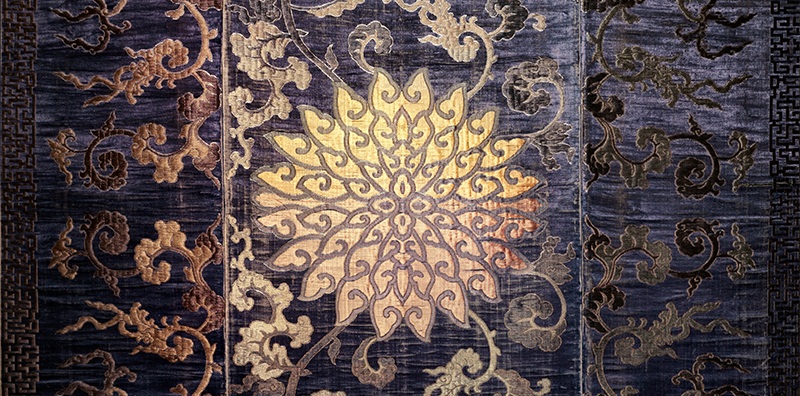
Located at Via Santa Teresa 20, on the first floor of a noble 17th-century residence, the Schneiberg Museum is a place where one loses all sense of time. Crossing its threshold means embarking on an initiatory and exotic journey. A magic of colors, lights, and sounds accompanies visitors through a succession of rooms where 36 Chinese carpets are displayed with refined taste and remarkable attention to detail.
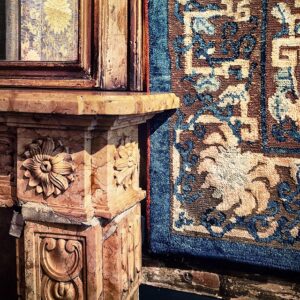
 These are rare carpets, made of silk with gold-plated copper thread inserts, produced by the imperial workshops for the court of the Qing dynasty (1644–1911). Some once adorned the pavilions and sumptuous halls of the Forbidden City and the Imperial Palace of Mukden in Manchuria, while others were offered as prestigious gifts to visiting dignitaries and diplomats.
The collection is the result of a special fondness for this type of artifact and the dedication of several generations of private collectors.
After being exhibited at the Museum of Oriental Art in Turin between December 2015 and March 2016, the precious collection found its permanent home in our city in September 2020—perhaps not by chance…
Turin, an Esoteric City
 In the West too, the desire to grasp the secrets of the universe through symbols, geometries, and correspondences was a theme dear to alchemists. A city with a long esoteric tradition, Turin welcomed Nostradamus twice, fueling myths and fascinations that still captivate scholars and curious minds today.
The Schneiberg Museum fits perfectly within this lineage of spirituality and white magic that has characterized Turin for centuries. Beyond their purely aesthetic and decorative function, the carpets now displayed in the noble rooms of Palazzo Provana di Collegno were originally intended to play a magical-religious role in the rituals and ceremonies of the Qing court. For this reason, several pieces bear an inscription along the upper border indicating the room for which they were intended—spaces where specific functions were performed.
They were also conceived as a refined philosophical-spiritual puzzle: each carpet represented a kind of mosaic tile, whose meaning would reveal itself only to those capable of deciphering the stories woven into its warp and weft. Due to the many fires that devastated the wooden structures of imperial pavilions and residences, many carpets were lost. Today, between private collections and museums, only 390 silk-and-metal carpets from the Qing era are known.
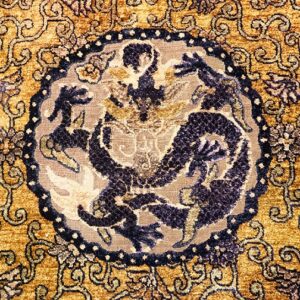
Earthly and aquatic dragons, fantastic animals, waves of the primordial ocean, clouds, and flowers populate these splendid carpets—an iconography sometimes distant from the Western imagination, yet rich in fascination and animated by a purpose shared by every true alchemist: the pursuit of purity and immortality.
Visiting the Schneiberg Museum
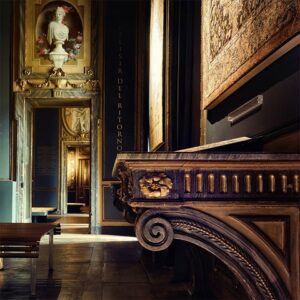 The building that houses the museum was the residence of the noble Provana di Collegno family until the late 19th century and later served various functions. Built in 1687 according to a design attributed to the great Baroque architect Guarino Guarini, its splendid monumental atrium is now in need of careful restoration.
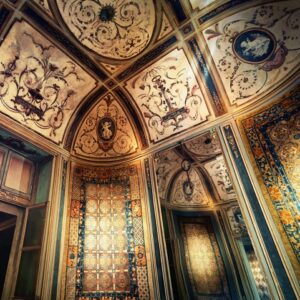
The stately rooms where the Schneiberg Museum is set up still preserve frescoes in excellent condition, despite the damage the building sustained during the bombing on the night of 8 December 1942.
The museum itinerary, however, focuses primarily on the content rather than the container: the extraordinary collection of Chinese carpets.
The guided tours, led by highly knowledgeable staff, help visitors navigate this surprising universe and become familiar with Taoist cosmology. Groups are intentionally kept small, both due to the size of the rooms and to ensure a profound and intimate experience. What struck me most during my visit was rediscovering, with great pleasure, the deep affinities and invisible threads that unite different cultures and spiritualities beyond any creed or identity.
 For the beauty of the works and the unique atmosphere that pervades these rooms, I wholeheartedly recommend a visit to the Schneiberg Museum to anyone seeking an intimate experience capable of broadening their perspective, nurturing curiosity, and leaving a luminous trace in the heart.
Equally impressive is the room adorned with three-dimensional butterflies applied to the walls, enriching and enhancing a shared space where the most curious visitors can browse the publications available.
For opening hours and further practical information, please refer to the museum’s official website.
If you would like to combine this visit with a tour of the city or another museum, do not hesitate to contact us!
Photo: Brigitte Schindler