
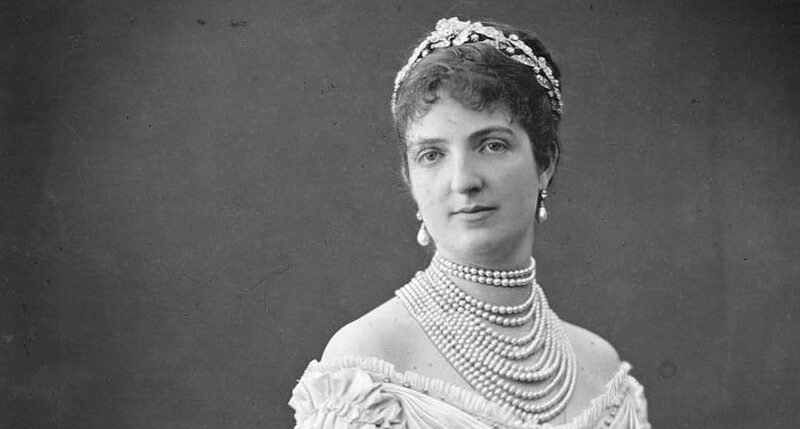
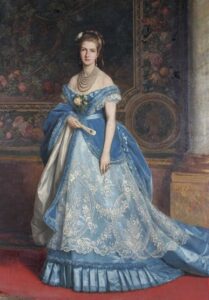
 Born in Turin in 1851, Margherita of Savoy married the future King Umberto I and became queen in 1878. Although she was Italy’s first queen, she was not the consort of Italy’s first king, Victor Emmanuel II. At the time of Italian unification, Victor Emmanuel II was already a widower. In addition to being Margherita’s father-in-law, he was also her uncle, as he was the brother of her father, Ferdinando, Duke of Genoa.
Intelligent, cultured, and highly charismatic, Margherita won the affection of the Italian people. She was probably the closest thing Italy ever had to a true First Lady.
The women’s magazine Margherita. Giornale delle Signore Italiane, published in Milan by the Treves Brothers from 1878 to 1921, was named after the queen herself. Indeed, Margherita was a genuine influencer ahead of her time!
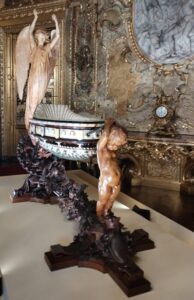 She had only one child, who would later become King Victor Emmanuel III. The exquisitely crafted cradle of the royal heir, originally from the Royal Palace of Caserta, will be on display at the Royal Palace of Turin until September 29, 2026.
To mark the centenary of the queen’s death (January 4, 1926), Turin is hosting several temporary exhibitions dedicated to her at various venues, including the Palazzina di Caccia di Stupinigi, the Royal Palace of Turin, and the Royal Library of Turin.
Margherita and Her Pearls
In official portraits, the queen is often depicted wearing numerous strands of pearls. The name Margherita derives from the ancient Greek word margarites, meaning “pearl”; it is therefore no surprise that the queen had a passion for pearls and, more generally, for precious jewelry.
It is said that her husband, Umberto I, frequently gave her jewels of extraordinary value, perhaps as a way of making amends for his many infidelities. Indeed, Umberto was reputed to be quite a womanizer and, in addition to various affairs, maintained a long-term relationship with Countess Eugenia Bolognini Litta.
The People’s Queen
 In 1889, during an official visit to Naples, the pizzaiolo Raffaele Esposito added basil to the traditional pizza topped with tomato and mozzarella, creating a patriotic dish featuring the colors of the Italian flag. The Pizza Margherita, named after Margherita of Savoy, remains one of the most popular pizzas in the world today.
Additionally, a charming legend tells that on one occasion Queen Margherita, instead of using cutlery, ate a chicken drumstick with her fingers, just like an ordinary person. With this unconventional gesture, the sovereign broke the strict rules of court etiquette to put her guests at ease. According to the story, this gave rise to the rhyming Italian saying, “La regina Margherita mangia il pollo con le dita” (“Queen Margherita eats chicken with her fingers”). The expression refers to the ability to break the rules occasionally with elegance and ease.
The queen’s popularity was so great that numerous hospitals and institutions were named after her. In 1879, the Apulian town of Saline di Barletta was also renamed Margherita di Savoia in her honor.
A Passion for Automobiles
Margherita of Savoy was not only a lover of art and culture. She was also fascinated by the technological innovations that were transforming society at the turn of the twentieth century. Among these were automobiles, which were still extremely rare and considered a luxury reserved for a privileged few.
She herself held a driving license and owned a fleet of thirteen automobiles, each named after a bird, among the others the so called Palombella, a luxury limousine (Itala 35/45 HP) now on display at the MAUTO – National Automobile Museum.
Among Peaks and Glaciers
Energetic and determined, Margherita loved the mountains. She frequently visited the Alps and helped popularize mountaineering at a time when the sport was reserved for a handful of pioneers, most of them men.
Europe’s highest mountain hut, the Capanna Regina Margherita, located on Monte Rosa at an altitude of 4,556 meters, is named in her honor.
The Regicide and the Final Years of Margherita of Savoy
 On 29 July 1900, King Umberto I fell victim to an assassination carried out by the anarchist Gaetano Bresci. Widowed by her husband’s death, Margherita became Queen Mother and devoted herself to cultural and charitable activities, spending long periods at the Palazzina di Caccia di Stupinigi, Villa Margherita in Bordighera, and Palazzo Margherita in Rome.
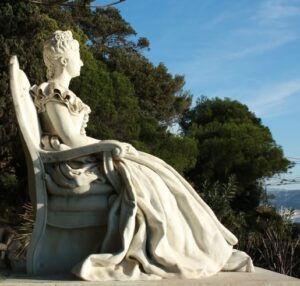
She passed away in Bordighera on 4 January 1926. The town has dedicated to her a monument carved from white Carrara marble, depicting her seated on a throne with her gaze turned toward the sea.
Our guided tours will take you on a journey through fascinating stories, curiosities, and anecdotes. To book a themed tour on the topic of your choice, please do not hesitate to contact us!