

Photo: Evergreen Design House.

The test track 1966 (Archive of Centro Storico Fiat, Public domain, via Wikimedia Commons)
Rising like a concrete giant about 5 km (approximately 3 miles) from the city center of Turin, the Lingotto plant stands as a powerful symbol of the city’s industrial legacy. Once a buzzing epicenter of Italian car production, it is today a striking example of urban regeneration.
The Lingotto plant was officially inaugurated in May 1923, at the beginning of Italy’s fascist era. Designed by engineer Giacomo Mattè-Trucco, it was a revolutionary structure for its time, featuring a vertical production layout spread over five levels. Each floor had a specific function, with vehicles gradually assembled as they ascended, culminating on the rooftop, where the completed cars were tested.
From Industrial Powerhouse to Cultural Landmark
 Indeed, the test track on the roof, about 1.5 km long (nearly 1 mile), remains one of Lingotto’s most legendary features and even appeared briefly in the British movie The Italian Job (1969). While many scenes were filmed throughout Turin, a captivating sequence featuring Mini Coopers racing was shot on the rooftop track.
The factory produced around 300 vehicles per day. Two spiraling ramps, one at each end of the building, allowed cars to move from the ground floor all the way to the top, with as many as 50 cars tested simultaneously on the track, reaching a maximum speed of 70 km/h (about 43.5 mph).
During World War II, the plant was a target of Allied bombings, reflecting its strategic importance to the national economy. In the post-war years the Lingotto plant was rebuilt and returned to full operation, becoming a powerful symbol of Italy’s flourishing industrial sector and contributing to what is often referred to as Il miracolo economico—the Italian economic miracle of the 1950s and ’60s.
A New Life for the Lingotto Plant: Innovation, Art, and Urban Renewal
The last car produced at Lingotto was a Lancia Delta, which rolled off the line in 1982, marking the end of FIAT’s production activities at the site. This closure followed a period of intense labor unrest.

Thomas Bayrle, Flamingo, 2023 – Photo: Courtesy Pinacoteca Agnelli
After lying dormant for several years, the former Lingotto plant was given a new lease of life. In the 1990s, renowned Italian architect Renzo Piano led its transformation into a multi-use complex, now home to two hotels, a shopping center, and convention space. One of the most striking additions is the glass dome, a futuristic meeting room that once hosted a G7 summit, with a heliport located next to it.
Today, the rooftop test track is open to the public. Visitors can explore it on foot, enjoying breathtaking views of the Alps and the Turin hills. The former test circuit is now dotted with outdoor art installations and lush vegetation, turning a once utilitarian space into a haven of creativity and relaxation.
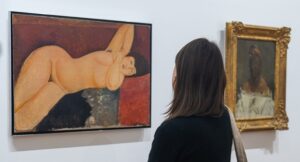
Photo: Evergreen Design
Inside a specially designed extension—shaped like a space shuttle—is a tiny but highly valuable art collection, including around 20 masterpieces by household names such as Picasso, Renoir, Modigliani, and Canaletto (Pinacoteca Agnelli). These works were donated by Marella and Giovanni Agnelli, the latter being the former chairman of FIAT and one of the most influential figures in Italy’s post-war industrial history.
The Lingotto plant today stands as a model of successful transformation. All around it, former industrial buildings have also been repurposed. The historic Carpano Vermouth factory, for example, has been home to Eataly since 2007—the first location of what has become a global chain celebrating Italian food culture.
Another nearby structure, the former Pastificio Italiano pasta factory, now houses a 4-star hotel, welcoming guests attending events at the Turin’s exhibition and convention center. Among its major annual events is the Turin International Book Fair, held every May, attracting thousands of visitors to this dynamic hub of culture and commerce.
If you’d like to enjoy an informative visit to the Lingotto area and the outstanding nearby car museum, accompanied by a local guide, feel free to contact us for a tailor-made experience.
For the curious: the Lingotto district takes its name from a farmhouse that once stood where the Fiat plant was later built, transforming the area from a rural landscape into a working-class neighborhood.