
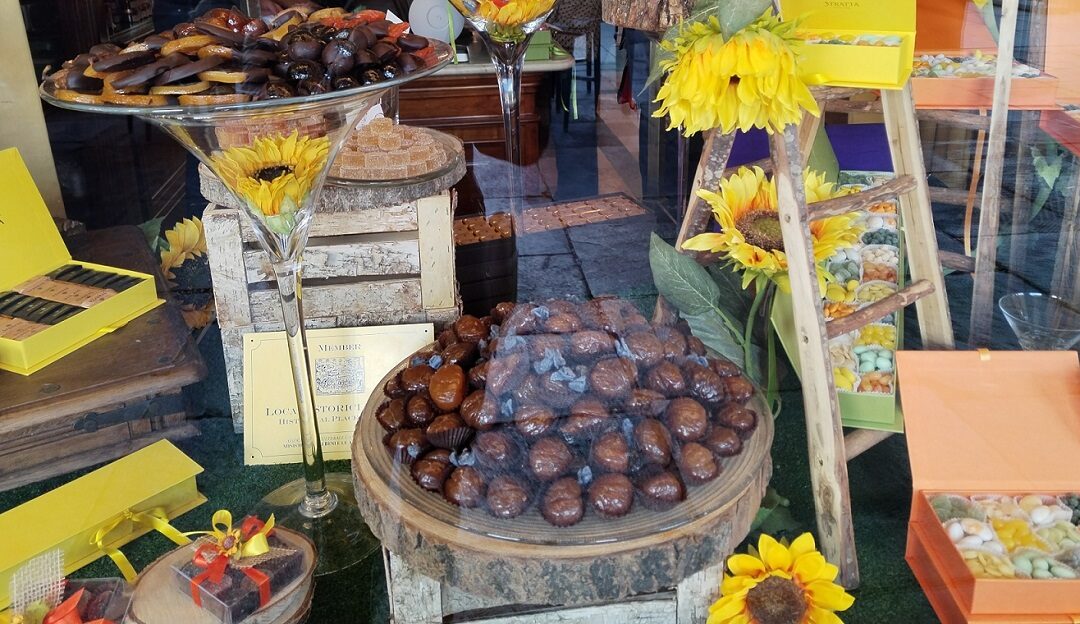
With the arrival of autumn, the hills and woods of Piedmont yield two of their most prized treasures: porcini mushrooms and, above all, the Alba white truffle.
Porcini: a true delicacy
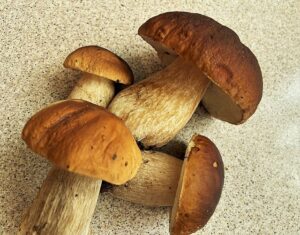 The porcino mushroom (called bulé in Piedmontese dialect) is prized for its firm flesh, delicate flavor, intense aroma, and versatility in the kitchen. It can even be enjoyed raw, sliced paper-thin in salads, though Piedmontese tradition prefers it cooked. Whether fried in batter, sautéed with garlic and parsley, or starring in creamy risottos, porcini have countless admirers.
Risotto, in its many variations, holds a special place in our regional cuisine. This is no coincidence: in the province of Vercelli, rice paddies stretch as far as the eye can see, cultivated since the Middle Ages thanks to Cistercian monks.
The pairing of rice and porcini is thus the perfect synthesis of two Piedmontese excellences. The region’s oak, chestnut, and beech woods provide ideal conditions for mushroom growth. Their appearance depends on the weather: the most generous years are those when September and October bring alternating periods of rain and sunshine, without excessive heat or early frosts. Starting in September, Turin’s Porta Palazzo market offers a daily abundance of fresh porcini.
Freshness is key for the best culinary results, since mushrooms are delicate and highly perishable. They should be eaten quickly to preserve their flavor. For winter supplies, however, dried porcini are a great option.
The Alba white truffle: a luxury for the palate
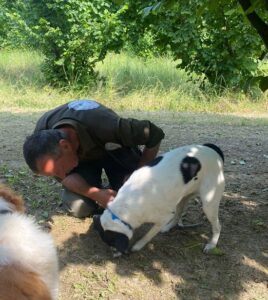 Truffles are also fungi, but with a special trait: they grow underground, in symbiosis with the roots of oaks, poplars, linden trees, and hazelnuts. To unearth them, Piedmont’s trifulao—truffle hunters—rely on specially trained dogs with extraordinary noses.
While black truffles can be found in many Italian regions, the Alba white truffle is a rare gem. Considered one of the most prized delicacies in global gastronomy, its powerful aroma can elevate the simplest dishes, from tajarin (egg tagliolini) with butter to a fried egg. Its rarity explains its high price: the white truffle requires very specific conditions—calcareous soils and balanced humidity—and is available only from late September to December.
Every year, Alba celebrates this treasure with the International White Truffle Fair, an event that draws gourmets and enthusiasts from around the world. Here, the truffle is not just an ingredient but an ambassador of Piedmontese culture and tradition.
In the past, white truffles were even offered as diplomatic gifts by Piedmontese envoys to European courts! For those eager to explore further, October 2023 saw the opening of MUDET, the Truffle Museum in Alba.
Chestnuts: from “poor man’s bread” to gourmet specialty
Porcini and white truffles may be the stars of the season, but another autumn product, versatile and deeply rooted in Piedmontese tradition, deserves attention: chestnuts. Once a staple food in mountain areas, chestnuts were known for centuries as the “poor man’s bread,” nourishing entire communities thanks to their nutritional richness. Dried and ground, they produced a sweet flour used to make polenta, soups, and simple but hearty desserts.
Today, marroni—the finest variety of chestnut—feature in refined and diverse recipes, both savory and sweet. Roasted, they become the famous caldarroste, sold in town squares and filling the air with one of autumn’s most evocative aromas. Boiled or candied, they pair wonderfully with meat dishes, especially game and roasts. 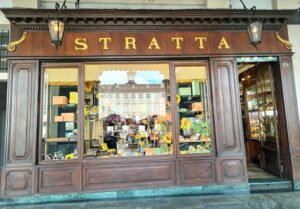
In pastry-making, they reach their peak in the marron glacé, whose origin is contested between France and Piedmont. In the pastry shops and confectioneries of Cuneo and Turin, marron glacé are indisputably the flagship product of autumn.
A visit to the historic Stratta confectionery, under the porticoes of Piazza San Carlo in Turin, is a must for sweet lovers: its elegantly decorated shop window, filled with a variety of colors and delights, is a spectacle in itself.
Across many Piedmontese valleys, from the Susa Valley (Villar Focchiardo) to the valleys of Cuneo, chestnuts are celebrated with lively festivals. Cuneo also hosts the National Chestnut Fair, a gastronomic event that draws thousands of visitors every October.
Thus, alongside porcini and Alba’s white truffle, chestnuts complete the mosaic of Piedmont’s autumn flavors, telling a story that blends tradition with culinary artistry. For those who love historic stores like Stratta, I’ve written another article you might find interesting.